
Laser teeth whitening is an in-office bleaching procedure in which a dentist applies a high-concentration hydrogen peroxide gel to isolated, protected teeth and then exposes that gel to a focused light or laser source across several timed cycles, typically producing a visible shade change in a single 60-to-90-minute appointment.
That is the honest definition. Here is the honest context, which you will rarely see in the first three search results: the peer-reviewed evidence does not support the idea that the laser is what makes the treatment work.
Multiple systematic reviews and meta-analyses have now compared in-office bleaching performed with light activation against the identical gel applied without it. Without considering variations in the protocols, activating in-office bleaching gel with light does not appear to improve color change or affect tooth sensitivity, regardless of the hydrogen peroxide concentration. A 2026 umbrella review reached the same conclusion across LED, halogen, and laser systems: laser or light activation showed no consistent improvement in final whitening efficacy compared with non-activated protocols, sensitivity was not reduced, and some high-energy protocols performed less favorably.
This does not mean in-office whitening doesn’t work. It works very well. It means the peroxide is doing the work, and the light is largely a marketing and workflow feature. Understanding that distinction is the single most valuable thing you can take into a consultation, because it changes which questions you ask and what you’re willing to pay a premium for.
This guide covers the chemistry, the clinical protocol, real 2026 pricing, the side effects that get glossed over, who should not do this at all, and what happens to your mouth in the two weeks afterward.
How Laser and Light-Activated Bleaching Actually Work
The chemistry: oxidation, not scrubbing
Tooth discoloration comes in two forms. Extrinsic stains sit on the outer enamel surface — coffee, tea, red wine, tobacco, chromogenic bacteria — and largely come off with a polish or a hygiene visit. Intrinsic stains are the ones bleaching targets. These are pigmented organic molecules, called chromogens, that have diffused into the porous structure of enamel and accumulated in the underlying dentin.
Hydrogen peroxide is a small, unstable molecule. It penetrates the enamel prism structure and the dentinal tubules, then decomposes into reactive oxygen species — primarily perhydroxyl and hydroxyl free radicals. These radicals attack the conjugated double bonds in chromogen molecules, cleaving the long, light-absorbing carbon chains into shorter fragments. Shorter chains absorb less visible light. The tooth doesn’t get coated in anything; the pigment molecules are chemically broken apart in place.
Carbamide peroxide, used in take-home systems, is simply a slower delivery vehicle. It breaks down into hydrogen peroxide and urea at roughly a 1:3 ratio — so 10% carbamide peroxide delivers approximately 3.5% hydrogen peroxide, released gradually over hours.
“Laser” vs. what most offices are actually using
This is where the category gets muddy, and where a patient-first article has to be blunt.
- True dental lasers — diode (810, 940, 980 nm), Nd:YAG (1064 nm), argon (488 nm), and Er:YAG — emit coherent, single-wavelength light. Some practices genuinely use these for bleaching activation.
- LED systems — including Philips Zoom WhiteSpeed, the market leader — use blue LED light, typically in the 400–500 nm range. This is not a laser, though it’s frequently marketed and searched for as “laser whitening.”
- Plasma arc and halogen lamps — older broad-spectrum, high-heat units, now largely phased out due to thermal concerns.
The proposed mechanism for all of them is the same: photothermal and photochemical energy accelerates peroxide decomposition into free radicals. The problem is that this acceleration doesn’t reliably translate into a better final result. An in vitro study applying Nd: YAG irradiation during bleaching with 35% hydrogen peroxide found no improvement in color change compared with peroxide alone, and a split-mouth clinical study found no additional color change attributable to the laser while postoperative sensitivity increased.
One nuance worth knowing, because it’s where the field is moving: a recent meta-analysis reported that violet-light activation combined with carbamide peroxide may produce greater color change without increasing tooth sensitivity</cite>, and separately, photobiomodulation — low-level laser applied specifically to reduce discomfort rather than to activate gel — reduced post-bleaching sensitivity across placebo-controlled randomized trials without impairing color change.
So there is a legitimate clinical role for lasers in whitening. It’s just not the one on the brochure. The useful application is pain control, not pigment removal.
The Step-by-Step In-Office Clinical Protocol
Knowing the sequence lets you evaluate whether the office you’re sitting in is cutting corners.
1. Pre-treatment examination and shade recording
A proper appointment begins with a full exam: caries check, periodontal probing, assessment of existing restorations, and evaluation for cracks, recession, and exposed dentin. Baseline shade is recorded against a VITA Classical guide (A1–D4, reordered by value) or the VITA Bleachedguide 3D-MASTER, which is designed specifically for the lighter end of the range. Photographs should be taken with the shade tab held in the same plane as the teeth.
If you leave a whitening consultation without a recorded baseline shade, you have no way to evaluate the result later. Ask for it.
2. Prophylaxis
Extrinsic stain and plaque biofilm are removed first. Peroxide cannot reach chromogens through a layer of calculus, and bleaching over an unpolished surface produces patchy results.
3. Isolation and soft-tissue protection
This is the safety-critical step. High-concentration peroxide causes immediate chemical burns on gingival tissue — visible as gingival blanching, a white, sometimes tender patch.
- A cheek retractor is placed, along with lip and tongue protection.
- A light-cured resin dam (liquid dam) is painted along the gingival margin of every tooth being treated and cured in place, forming a physical barrier 0.5–1 mm onto the enamel.
- Some clinicians use a true rubber dam instead. It’s more isolating but more time-consuming and less tolerated.
- Gauze or cotton rolls absorb any gel migration.
Sloppy dam placement is the number one cause of a miserable post-op experience. If the barrier has gaps, gel contacts tissue.
4. Gel application and light cycling
A 25–40% hydrogen peroxide gel is applied in a 1–2 mm layer across the facial surfaces. The light unit is positioned, and treatment runs in cycles — commonly three to four rounds of 15 minutes, with gel suctioned and refreshed between each.
There’s a meaningful evidence point here on concentration: meta-analyses indicate that moderate peroxide concentrations of approximately 25–35% achieve whitening outcomes comparable to higher concentrations while significantly reducing the risk and intensity of tooth sensitivity. Higher is not better. It is just more uncomfortable.
5. Neutralization and desensitization
After the final cycle, gel is thoroughly suctioned and rinsed, the resin dam is peeled off in one piece, and a desensitizing agent is applied — typically 5% potassium nitrate with 2% sodium fluoride, sometimes a CPP-ACP (casein phosphopeptide–amorphous calcium phosphate) paste. Potassium nitrate works by depolarizing the nerve fibers in the pulp; fluoride and calcium phosphate support surface remineralization.
Final shade is recorded — with the explicit caveat that this reading is inflated. More on that below.
What Laser Teeth Whitening Costs in 2026
Whitening is universally classified as cosmetic, which means insurance does not cover it. You are paying out of pocket, so the numbers matter.
National ranges
<cite index=”6-1″>Professional in-office whitening (Zoom or laser) runs $300–$1,000 per session in the U.S. in 2026, averaging around $450–$500, with high-cost metros such as Los Angeles, San Francisco, and Manhattan reaching $1,000–$1,200.</cite> Laser-specific pricing sits higher: the national average for high-tech laser dental whitening is around $792, with a typical range of $611–$1,368, while a basic non-laser chemical in-office session averages roughly $450–$500.
For comparison, Zoom whitening averages around $583 nationally, with most patients paying between $463 and $1,011.
Notice that gap. You are paying roughly $200–$300 extra for the laser designation, for an outcome the evidence says is not measurably different.
Regional variance
Pricing tracks local practice overhead more than clinical quality. Expect the low end of the range in the Midwest, the Southeast, and at corporate chains; the high end in coastal metros and in cosmetic-focused boutique practices. A single-arch treatment is sometimes offered at roughly half the full-mouth fee.
The costs nobody quotes you
The chair fee is the beginning, not the total.
- Custom take-home trays: $150–$600 for a dentist-fabricated set. Many offices bundle these; many do not. These are what actually preserve your result.
- Touch-up gel syringes: $20–$50 each, ongoing. Budget one to three per year.
- Desensitizing toothpaste: $8–$15 per tube, often for several weeks around treatment.
- Repeat sessions: Deep tetracycline or fluorosis staining frequently needs two or more visits.
- Restoration replacement: This is the big one. Crowns, veneers, and composite bonding in your smile zone will not bleach. If your natural teeth lighten four shades, existing restorations now look dark and mismatched, and matching them means replacing them — potentially $1,000–$2,500 per unit. Discuss this before whitening, not after.
Realistic first-year total for someone doing this properly, with trays and maintenance: $700–$1,400.
Comparison: Laser vs. Take-Home Trays vs. OTC Strips vs. DIY
| In-Office Laser/LED | Custom Take-Home Trays | OTC Whitening Strips | Charcoal / DIY “Natural” | |
|---|---|---|---|---|
| Typical 2026 cost | $500–$1,200 | $150–$600 | $20–$70 | $10–$25 |
| Active agent | 25–40% hydrogen peroxide | 10–22% carbamide peroxide | ≤10% carbamide / ~6% HP | None (abrasive only) |
| Time to result | Single 60–90 min visit | 1–3 weeks, 30 min–4 hrs daily | 2–4 weeks, daily | No true bleaching |
| Typical shade change | 3–8 shades (pre-rebound) | 3–6 shades | 1–2 shades | 0–1 (surface polish only) |
| Coverage | Even; all surfaces of treated arch | Excellent; tray-adapted | Poor on curved/rotated teeth | Random |
| Sensitivity risk | Highest — acute, 24–48 hrs | Moderate; controllable by dosing | Low–moderate | Low, but abrasion risk |
| Soft-tissue risk | Gingival burn if isolation fails | Low with fitted trays | Gel migration onto gums | Gingival abrasion |
| Enamel risk | Transient surface changes; safe when supervised | Transient; well-documented safety | Low at regulated concentrations | Real, cumulative abrasive wear |
| Longevity | 6 months–2 years | 1–2 years with touch-ups | 3–6 months | N/A |
| Supervision | Full clinical oversight | Dentist-fitted, home-dosed | None | None |
| Best for | Events, fast results, motivated patients | Best overall cost-to-result ratio | Mild stains, budget | Nothing |
The honest verdict: custom take-home trays deliver the best value in this table. They reach comparable endpoints to in-office treatment over a slightly longer timeline, at a fraction of the cost, with lower sensitivity because the dose is spread out. The genuine advantages of in-office treatment are speed, supervision, and protection of soft tissue — which matter, but should be priced honestly.
On charcoal and DIY: activated charcoal has no bleaching mechanism. It is an abrasive. Whatever brightness people report is surface stain removal, and repeated use risks irreversible enamel abrasion and increased long-term staining as the dentin shows through more. The same applies to baking soda plus lemon juice or apple cider vinegar, which adds an acid erosion problem on top.
The Downside: Sensitivity, Dehydration, and Enamel Changes
An article that doesn’t cover this is not a useful article.
Acute post-bleaching sensitivity
This is the most common adverse effect, reported by a majority of in-office patients. It presents as sharp, spontaneous “zingers” — brief electrical jolts, often unprovoked, worst in the first 24 hours and usually resolved by 48–72 hours.
The mechanism is reversible pulpitis. Hydrogen peroxide is small enough to diffuse through enamel and dentin into the pulp chamber, where it triggers an inflammatory response in an enclosed, non-expandable space. Heat from high-energy light activation adds a thermal component, which is why <cite index=”14-1″>high-energy activation shows parameter-dependent thermal concerns regarding intrapulpal temperature.</cite>
Management that actually works:
- Pre-treatment: 5% potassium nitrate desensitizing toothpaste twice daily for 10–14 days before the appointment.
- During: ask for moderate rather than maximum peroxide concentration, and fewer, shorter light cycles if you’re a known sensitive responder.
- Immediately after: in-office potassium nitrate/fluoride gel application.
- First 48 hours: avoid temperature extremes entirely — not cold, not hot. Continue desensitizing paste.
- If severe: NSAIDs per your dentist’s guidance. Evidence for prophylactic ibuprofen is mixed, but it helps reactively.
- For repeat offenders: ask specifically about photobiomodulation, which has randomized-trial support for reducing post-bleaching sensitivity.
If sensitivity lasts beyond a week, or if a single tooth hurts persistently rather than the whole arch, that is not normal bleaching sensitivity. Call the office — it may indicate a crack, a leaking restoration, or existing pulpal pathology.
Enamel dehydration and the rebound effect
During isolation, your teeth spend 60–90 minutes exposed to air and suction. They dehydrate. Dehydrated enamel becomes more opaque and scatters light differently, making teeth look dramatically whiter than they actually are.
Your teeth will rehydrate over the following 24–72 hours and darken noticeably. A substantial portion of the shade change you see in the chair — often a quarter to a third of it — is dehydration, not bleaching. This is normal, it is expected, and any office that photographs your “result” immediately post-treatment and shows it to you as the outcome is, at minimum, being imprecise.
The true final shade should be assessed at two weeks. Reputable practices schedule that follow-up. Fewer do than should.
Surface changes and micro-pitting
<cite index=”18-1″>Bleaching agents can cause surface alterations on enamel including depressions, porosity, and surface irregularities, which make dentin more susceptible to post-operative sensitivity.</cite> Microhardness drops measurably immediately after treatment.
The important context: in supervised, appropriately dosed protocols these changes are largely transient. Saliva is a supersaturated calcium and phosphate solution, and remineralization restores surface hardness over roughly one to two weeks. This is why post-treatment fluoride and CPP-ACP application isn’t an upsell — it’s accelerating a process that determines whether those surface changes resolve or persist.
Where the safety record breaks down is with over-bleaching: back-to-back in-office sessions, daily use of high-concentration take-home gel beyond prescribed duration, or the compulsive whitening pattern sometimes called “bleachorexia.” Cumulative, unsupervised exposure is a different risk profile from one properly spaced treatment.
A reasonable cumulative ceiling: one in-office session per 12 months, with short take-home touch-up cycles (2–3 nights) every 3–6 months as needed. More than that should involve a conversation, not a purchase.
Who Is a Good Candidate — and Who Isn’t
Strong candidates
- Healthy gingiva, no active periodontal disease
- No untreated caries or defective restorations
- Generalized yellow or yellow-brown discoloration (responds best)
- Age-related dentin darkening
- Coffee, tea, red wine, or tobacco staining
- Realistic expectations and no restorations in the visible smile zone
- Adults over 18 (large pulp chambers in younger patients increase sensitivity risk)
Absolute and relative contraindications
- Active periodontal disease or gingivitis. Inflamed, bleeding tissue plus 35% peroxide is a poor combination. Treat first.
- Untreated caries or leaking restorations. Peroxide travels straight through a carious lesion or a marginal gap into the pulp. This causes real pain, not a zinger.
- Exposed root surfaces / significant recession. Cementum and root dentin do not bleach the way enamel does, and they conduct peroxide to the pulp far more readily.
- Thin, eroded, or hypoplastic enamel. Reflux, bulimia history, or severe attrition means less enamel between gel and dentin.
- Anterior crowns, veneers, or composite bonding. These will not change color. Full stop. Plan restoration replacement into your budget or reconsider.
- Tetracycline staining. Responds poorly and slowly; typically requires 3–6 months of extended take-home bleaching, and may ultimately need veneers.
- Fluorosis with white spot lesions. Hypomineralized white spots often bleach faster than surrounding enamel, temporarily increasing contrast and looking worse before it looks better. Microabrasion or resin infiltration may be the better route.
- Non-vital / trauma-darkened single tooth. Needs internal (walking) bleaching, not external.
- Pregnancy and nursing. There’s no strong evidence of harm, but peroxide safety data in pregnancy is limited and whitening is entirely elective. The standard, sensible recommendation is to defer.
- Peroxide allergy or known severe gag reflex.
The 48-Hour White Diet and Long-Term Maintenance
Why the first 48 hours matter
Immediately after treatment, enamel is temporarily more porous and — critically — the acquired pellicle has been stripped away. That pellicle is the thin protein film derived from saliva that normally coats your teeth and acts as a stain barrier. It takes roughly 24–48 hours to fully re-form.
During that window, your teeth are unusually absorbent to pigment. Staining now can be significant and difficult to reverse.
Strictly avoid for 48 hours
- Coffee, espresso, black and green tea
- Red wine; dark beers and stouts
- Cola and dark sodas
- Tomato sauce, marinara, ketchup, tomato juice
- Soy sauce, balsamic vinegar, teriyaki, curry, turmeric
- Berries — blueberries, blackberries, raspberries, cherries, pomegranate
- Beets, red cabbage, dark leafy greens in quantity
- Chocolate, especially dark
- Colored candy, popsicles, sports drinks
- Red or purple mouthwash (chlorhexidine and cetylpyridinium-containing rinses stain)
- All tobacco and vape products — the single worst offender
Safe “white diet” foods
Chicken, turkey, white fish, eggs (whites especially), white rice, pasta with olive oil or cream sauce, potatoes, cauliflower, plain yogurt, white cheeses, bananas, apples (peeled), pears, milk, water, coconut water, clear broths, tofu.
Practical tactics
- Straw technique: for anything pigmented and cold, position the straw past the anterior teeth toward the back of the mouth. This genuinely helps, but does nothing for hot or swished liquids.
- Rinse immediately: plain water after any pigmented food or drink, every time.
- Wait 30 minutes to brush after anything acidic. Brushing softened, demineralized enamel accelerates wear.
- Stimulate saliva: sugar-free xylitol gum after meals raises salivary flow, which buffers acid, delivers calcium and phosphate for remineralization, and speeds pellicle re-formation. This is one of the highest-value, lowest-effort habits in the entire protocol.
- Stay hydrated. Dry mouth, whether from medication, mouth breathing, or dehydration, is strongly associated with faster re-staining.
Long-term maintenance
- Touch-up trays every 3–6 months: 2–3 consecutive nights with 10% carbamide peroxide typically restores the shade. Far cheaper than repeating the in-office session.
- Switch to a lidded travel mug with a straw lid for daily coffee.
- Professional cleanings every six months. Most perceived “re-yellowing” at the 4–8 month mark is extrinsic stain accumulation, not loss of the bleaching result.
- Electric toothbrush with a pressure sensor. Excessive brushing pressure thins enamel over years and makes teeth look darker as dentin shows through.
- Re-record your shade annually against the same guide, so you’re comparing against data rather than memory.
Realistic longevity: 6 months to 2 years, driven almost entirely by diet, tobacco use, and maintenance discipline rather than by which technology was used on day one.
Your Oral Microbiome and Soft-Tissue Recovery After Bleaching
This is the part of the whitening conversation that gets almost no coverage, and it’s clinically interesting.
What high-concentration peroxide does to the oral ecosystem
Hydrogen peroxide is a broad-spectrum antimicrobial. It is not selective. When 35% peroxide sits on your teeth for 45 minutes, it doesn’t only oxidize chromogens — it disrupts the bacterial community across the dentition and adjacent soft tissue.
Your mouth hosts several hundred bacterial species in a structured biofilm ecology. Most are commensal or beneficial. Some, including Streptococcus mutans and Lactobacillus species, drive caries; others, like Porphyromonas gingivalis and Fusobacterium nucleatum, are associated with periodontal inflammation. Interestingly, certain commensal streptococci — S. sanguinis, S. gordonii — produce hydrogen peroxide themselves as a natural competitive mechanism.
After in-office bleaching you get a measurable, transient disruption: reduced total bacterial counts, shifted proportions, and a biofilm-depleted enamel surface that is essentially open ground for recolonization. In healthy patients, the community re-establishes toward baseline over days to weeks.
Two things follow from this that are worth acting on:
1. Recolonization is a window, not a neutral event. What repopulates a cleared surface depends on what’s available and what the local conditions favor. A low-pH, high-fermentable-carbohydrate environment in the days after bleaching favors acidogenic species. Saliva flow, diet, and hygiene during that window influence the composition you end up with.
2. Soft tissue needs its own recovery. Gingival blanching from peroxide contact is a superficial chemical burn. The white patch typically resolves within minutes to a few hours as tissue rehydrates, and the epithelium regenerates over 24–72 hours. If blanching persists beyond a day, or if tissue is painful, ulcerated, or bleeding, that’s a clinical call — not something to manage at home.
Supporting recovery in the two weeks after treatment
- Protect saliva. It is your primary remineralizing fluid and your pH buffer. Hydrate, chew xylitol gum, and if you take medications with xerostomic side effects (antihistamines, SSRIs, some antihypertensives), raise it with your dentist.
- Go gentle mechanically. Soft-bristle brush, light pressure, for at least a week. Irritated gingiva doesn’t need aggressive scrubbing.
- Keep flossing. Interproximal biofilm is where periodontal problems start, and it’s the area whitening gel never reached anyway.
- Skip alcohol-based mouthwash for two weeks. It’s drying and irritating to compromised epithelium, exactly when you want it calm.
- Avoid chlorhexidine unless prescribed. It stains, which defeats the purpose, and it’s a blunt antimicrobial at a moment when you want the commensal community to recover.
- Reduce fermentable carbohydrate frequency. Grazing on sugars during the recolonization window is the condition that favors the species you don’t want.
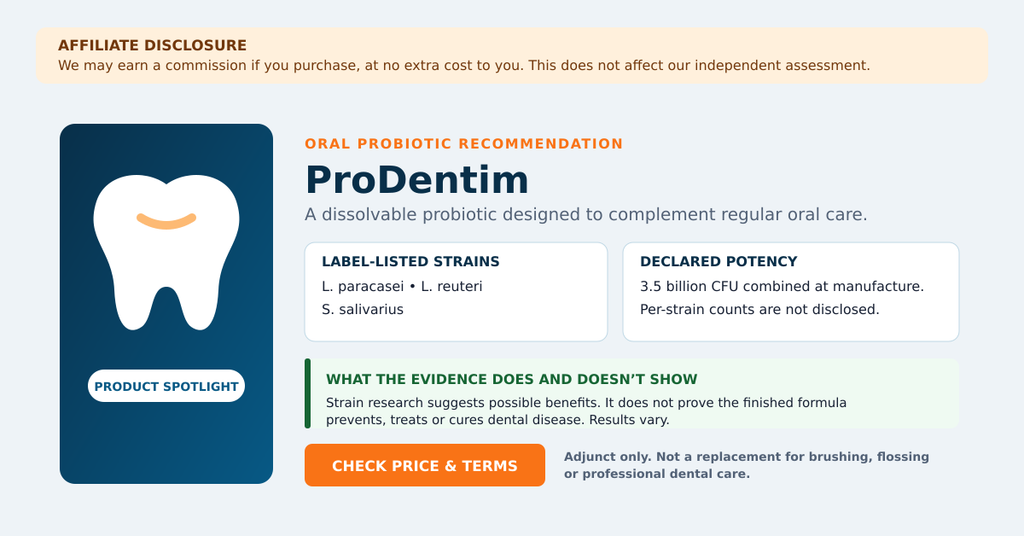
On oral probiotics — what the evidence supports and what it doesn’t
Oral probiotics are marketed heavily to exactly this moment — post-bleaching, “rebalance your flora.” The category deserves a fair and precise hearing.
What has reasonable support: specific, well-characterized strains have randomized-trial evidence for specific endpoints. Lactobacillus reuteri (DSM 17938 / ATCC PTA 5289) has been studied for reducing gingival inflammation and bleeding indices. Streptococcus salivarius K12 and M18 have evidence for oral malodor and, more tentatively, plaque and S. mutans suppression. Effects in the published literature are generally modest, measured over weeks, and not permanent — the strains are largely transient colonizers that require ongoing use.
What is not established: that oral probiotics “restore” a microbiome after bleaching, that any consumer product durably recolonizes the oral cavity, or that a proprietary blend outperforms the individually studied strains. A supplement is not a substitute for treating periodontal disease, and no probiotic corrects a hygiene or diet problem.
How to evaluate a product if you’re considering one: look for named strains with deposit numbers (not just “L. reuteri“), CFU counts per dose, a slow-dissolve lozenge or chewable format rather than a swallowed capsule (the target tissue is the mouth, not the gut), no added sugar, and a manufacturer willing to cite trials on their strains at their doses. Anything advertised primarily through countdown timers and testimonial videos should get more scrutiny, not less.
Clinical FAQ
Does laser teeth whitening ruin your enamel?
No, not when performed by a dentist at appropriate concentrations with proper isolation. Peroxide causes transient reductions in surface microhardness and temporary micro-porosity, but saliva-driven remineralization restores the surface over one to two weeks, and this is accelerated by fluoride and calcium phosphate application. The genuine enamel risks come from unsupervised over-use — repeated high-concentration sessions without intervals — and from abrasive DIY methods like charcoal, which cause mechanical wear that does not reverse.
Does laser teeth whitening hurt?
The procedure itself is not painful, though you may feel warmth or intermittent twinges during light cycles. The discomfort comes afterward: sharp, brief “zingers” affecting most in-office patients, peaking in the first 24 hours and typically resolving within 48–72 hours. Pre-treating with potassium nitrate toothpaste for two weeks beforehand, requesting a moderate rather than maximum peroxide concentration, and avoiding temperature extremes afterward substantially reduce it. Ask about photobiomodulation if you’ve had a bad experience previously.
Is laser whitening better than Zoom?
Zoom’s WhiteSpeed system uses blue LED light, not a laser, despite how it’s often searched. Functionally, the evidence says there is no meaningful difference in final outcome between laser activation, LED activation, and the same gel with no light at all — the peroxide concentration, contact time, and your starting shade determine the result. Given that laser-designated treatment averages roughly $200 more per session, the practical differentiator is the clinician’s protocol and isolation technique, not the brand of light.
How much does laser teeth whitening cost?
Nationally in 2026, laser whitening averages around $792, with most patients in the $611–$1,368 range; general in-office whitening runs $300–$1,000 per session. Budget beyond the chair fee for custom trays ($150–$600), touch-up gels ($20–$50 each), and — critically — possible replacement of visible crowns or bonding that won’t match your new shade. Insurance does not cover any of it.
How long do the results last?
Six months to two years. Longevity depends far more on your behavior than on the technology: tobacco use, daily coffee or red wine, dry mouth, and skipped cleanings shorten it dramatically. Patients who maintain with a 2–3 night tray touch-up every three to six months hold their shade more or less indefinitely.
Why did my teeth get darker a few days later?
That’s rehydration, not failure. Your teeth dehydrate during 60–90 minutes of isolation, which makes them appear temporarily and artificially whiter. As they rehydrate over 24–72 hours, they darken back to their true post-bleaching shade. Assess your real result at two weeks, against the same shade guide used at baseline.
How strict is the white diet, really?
Strict for 48 hours, then reasonable. The acquired pellicle — your natural stain barrier — needs roughly two days to re-form, and enamel is more porous during that window. One cup of coffee on day one can measurably compromise your result. After 48 hours, normal eating resumes with sensible habits: rinse with water after pigmented foods, use a straw for cold drinks, and don’t brush immediately after anything acidic.
Can I whiten while pregnant or breastfeeding?
The standard recommendation is to wait. There’s no strong evidence that peroxide bleaching harms a pregnancy, but safety data is limited and the procedure is entirely elective. There is no clinical reason to accept unquantified risk for a cosmetic outcome that can wait a few months.
The Bottom Line
Laser teeth whitening is a safe, effective, well-studied procedure that delivers a fast and visible result. What it isn’t is a technologically superior version of bleaching — the light is not what’s doing the work, and the price premium attached to it isn’t supported by outcome data.
What actually determines your result: your starting shade and stain type, whether your mouth is healthy enough to be bleached at all, the peroxide concentration and contact time, the quality of your clinician’s isolation technique, and — more than any of it — what you do in the two weeks and two years afterward.
Ask for a baseline shade recording. Ask about your restorations before treatment, not after. Ask whether take-home trays are included. Ask for a two-week follow-up. And if you’re sensitive, ask specifically about photobiomodulation and a moderate-concentration protocol.
This article is for educational purposes and does not replace examination, diagnosis, or treatment planning by a licensed dentist. Individual candidacy for bleaching depends on a clinical exam. If you experience persistent tooth pain, prolonged gingival irritation, or sensitivity lasting beyond one week after treatment, contact your dental provider.
About the Author